Jurassic World VR Expedition — Vehicle & Scanner Design
Project Overview
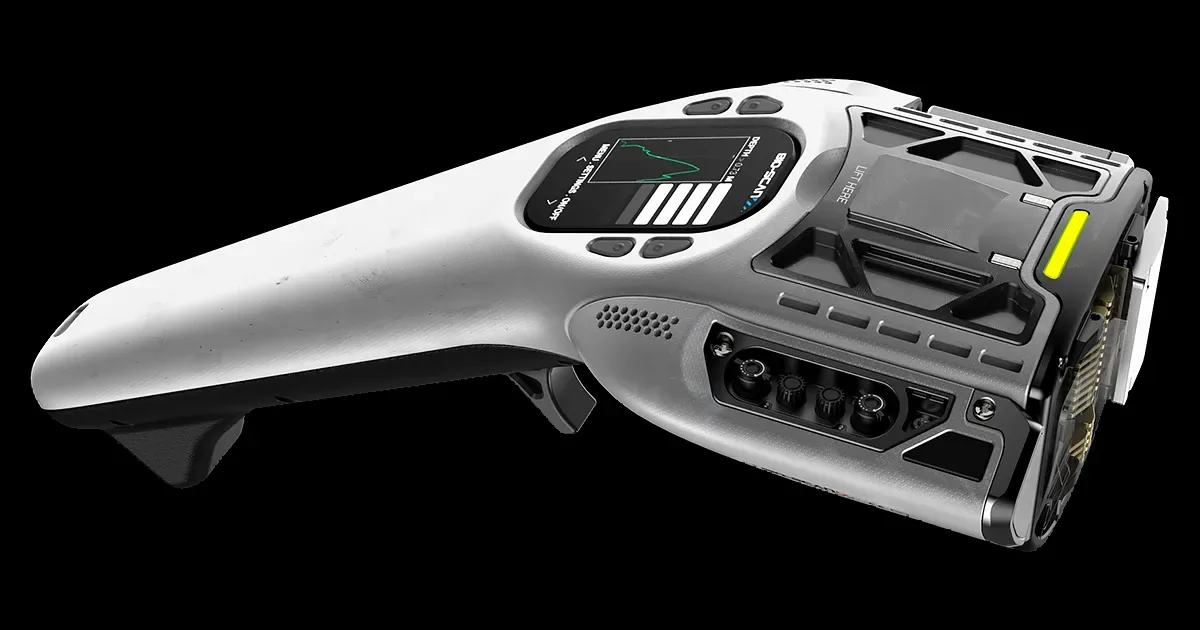
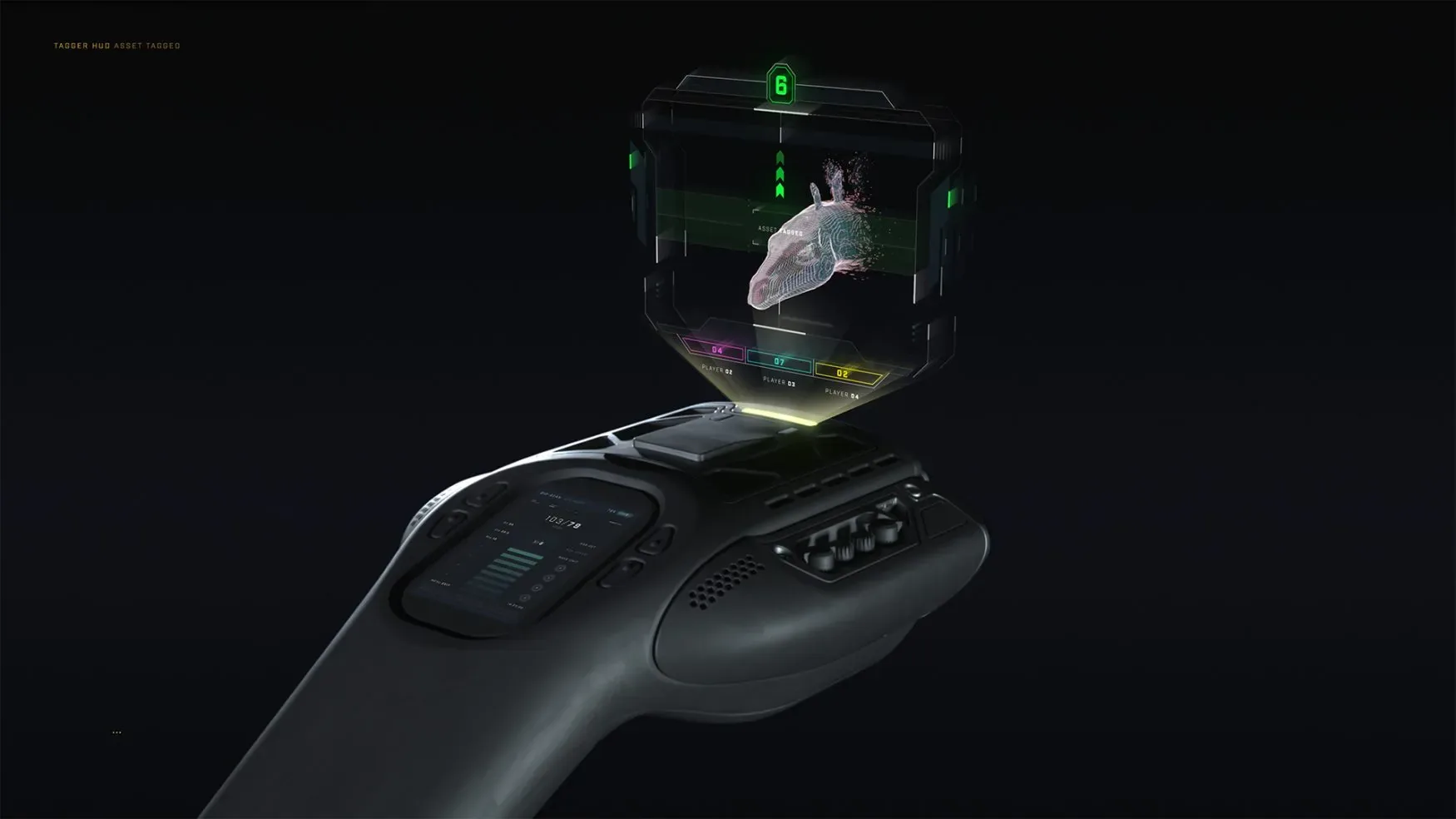
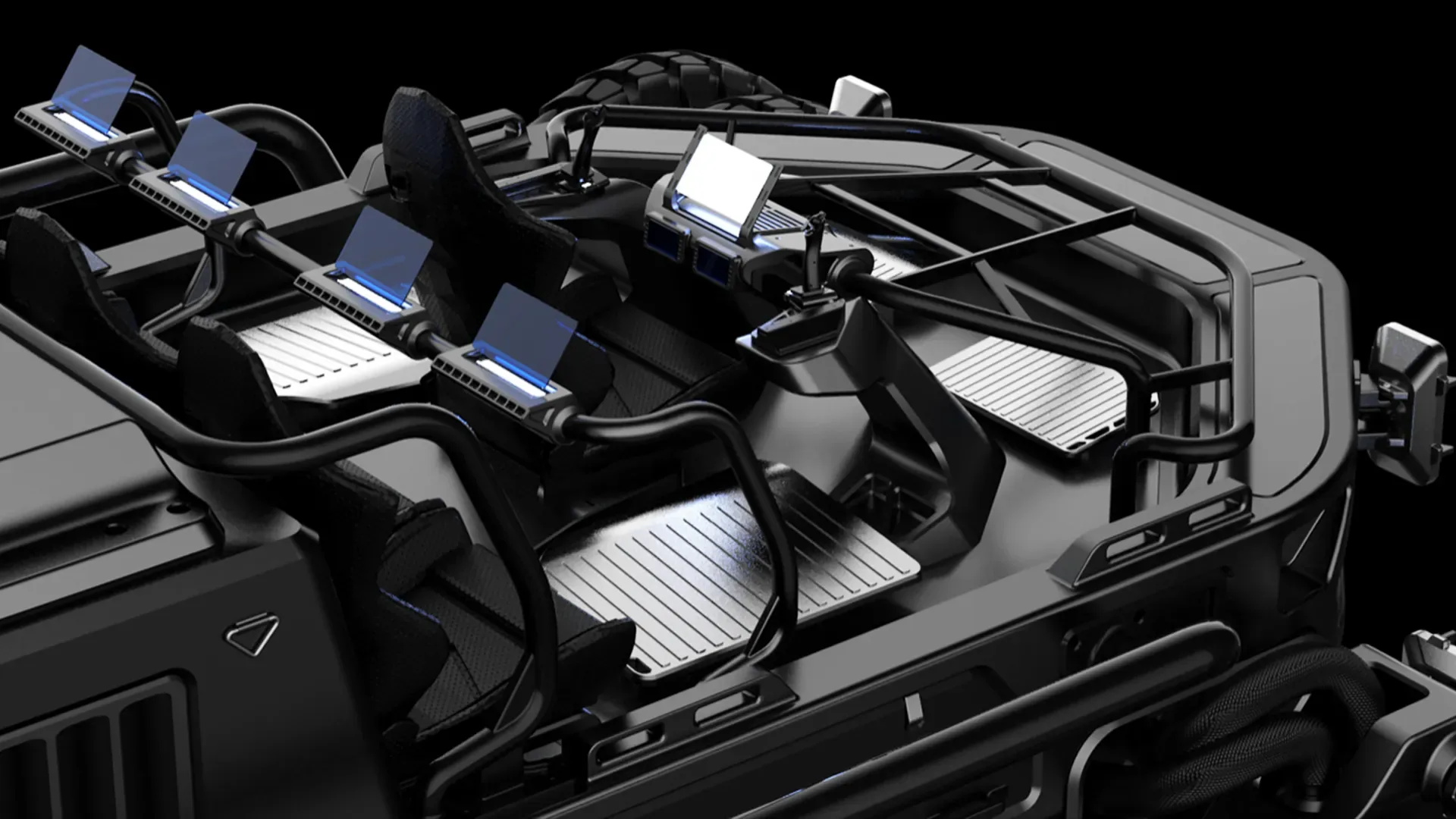
Hard-surface vehicle and scanner design for Jurassic World VR Expedition — an interactive cinematic location-based VR game from Universal Products & Experiences and The VR Company (VRC). Two player-facing pillars: a scanner (tagger) for scanning and identifying dinosaur species, and a vehicle that had to fuse real attraction seating with a custom futuristic off-road chassis.
Set on Isla Nublar as a short rescue adventure inspired by the Jurassic World films, the experience launched at more than 100 Dave & Buster’s locations (described by Universal as the largest location-based VR game launch to date) — up to four players on HTC Vive in a motion-simulator setup.
Credits
Experience — Jurassic World VR Expedition (Universal Products & Experiences). Written and directed by James Lima; executive produced by VRC co-founders Robert Stromberg and Guy Primus.
Scanner — collaboration with director James Lima and production designer Kevin Ishioka.
Vehicle — custom hard-surface chassis built around the physical attraction seating for Universal / VRC.
The Challenge
The ride is a physical installation. Virtual seating and hold-points had to match real-world constraints so what players sat in lined up with what they saw. Dimensions and technical specs were shared so the VR world could lock to that install — not float free as disposable concept art.

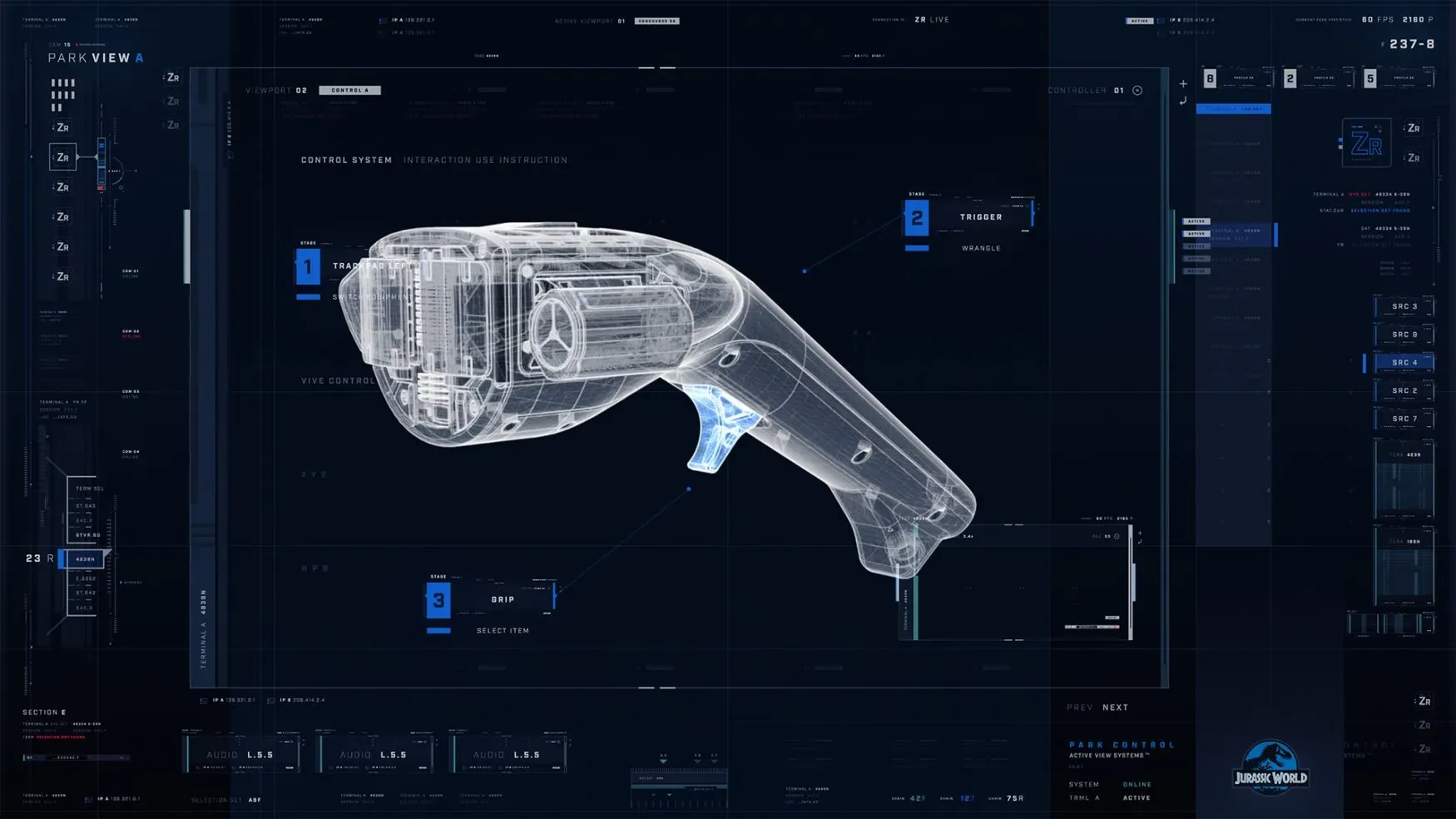
The same sensory contract applied to the hands: the scanner had to respect Valve controller proportions, trigger, and button layout so touch matched vision. Mismatch would pull players out of the story; accuracy let them stay in the content.
Scope
Scanner / tagger for dinosaur scan and species identification
Vehicle designed around physical ride seating, rebars, and seat aesthetic
Hard-surface language that feels functional and modern while staying familiar for a mass-audience franchise attraction
Approach — Scanner
Form language locked to the Valve controller first — proportion, trigger, and buttons. Once that 1:1 grip map was set, remaining surfaces had freedom: a sophisticated, functional tagger without breaking the tactile contract. In-experience role: scan dinosaurs and identify species.
Scanner
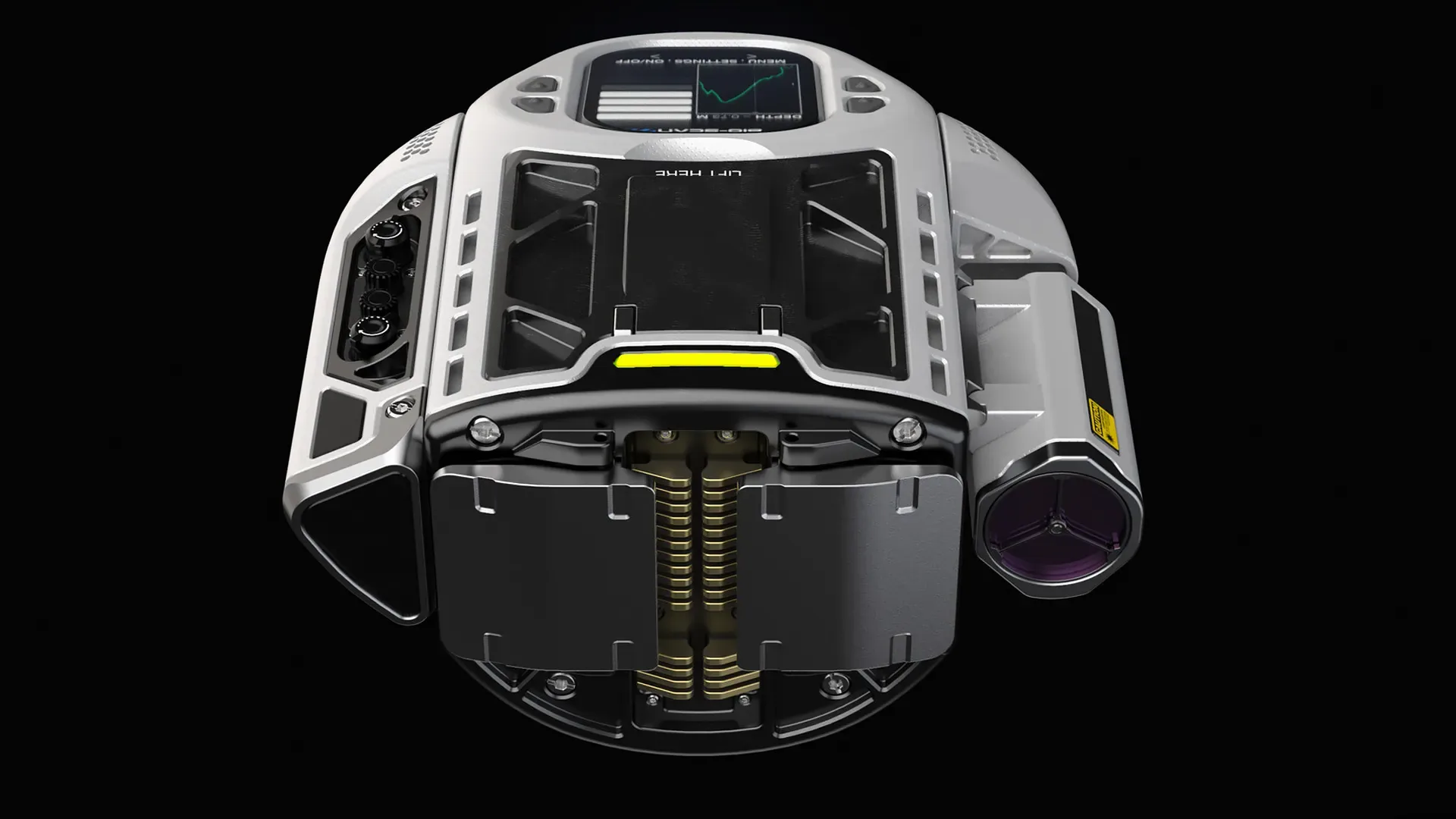
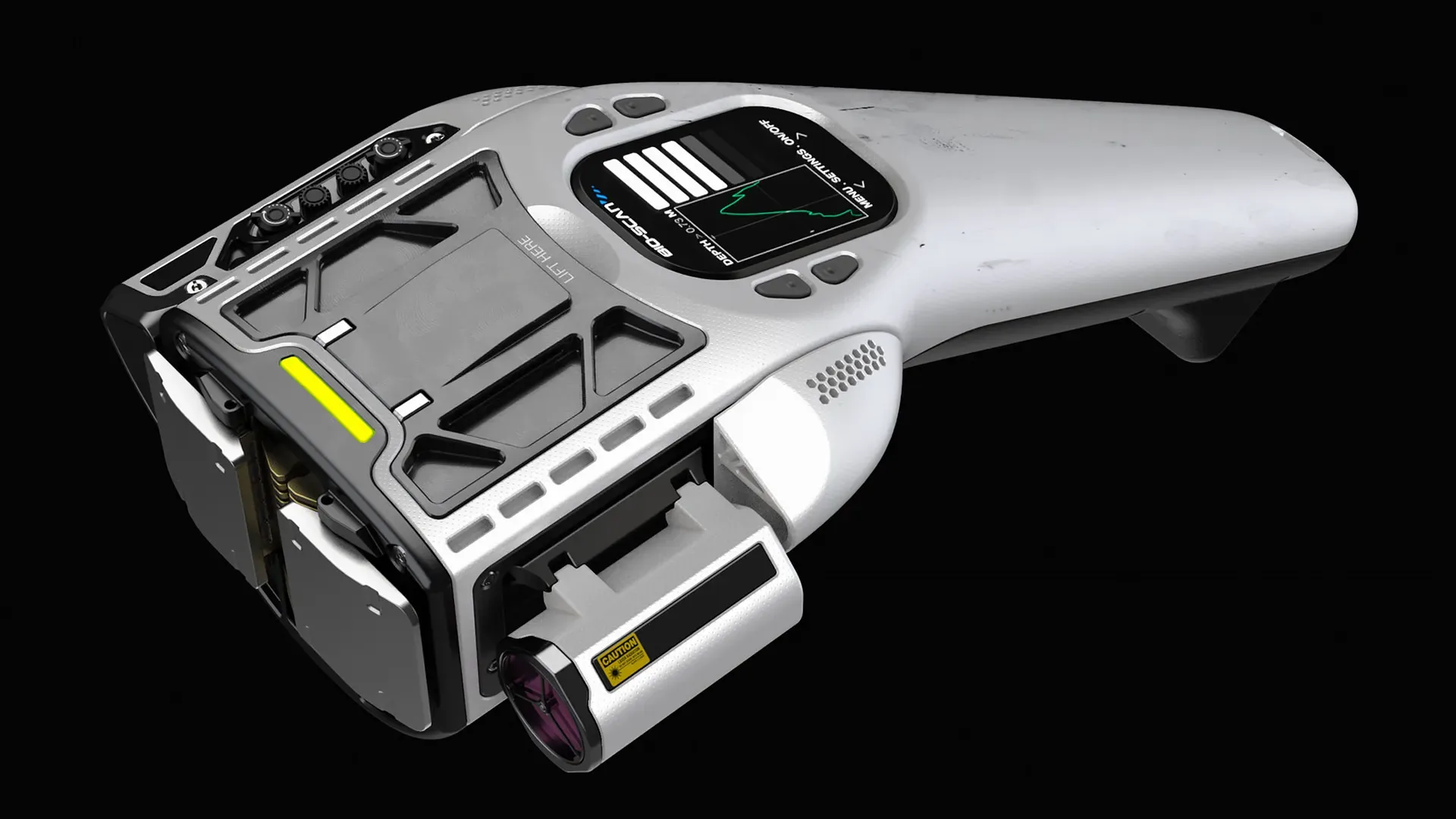
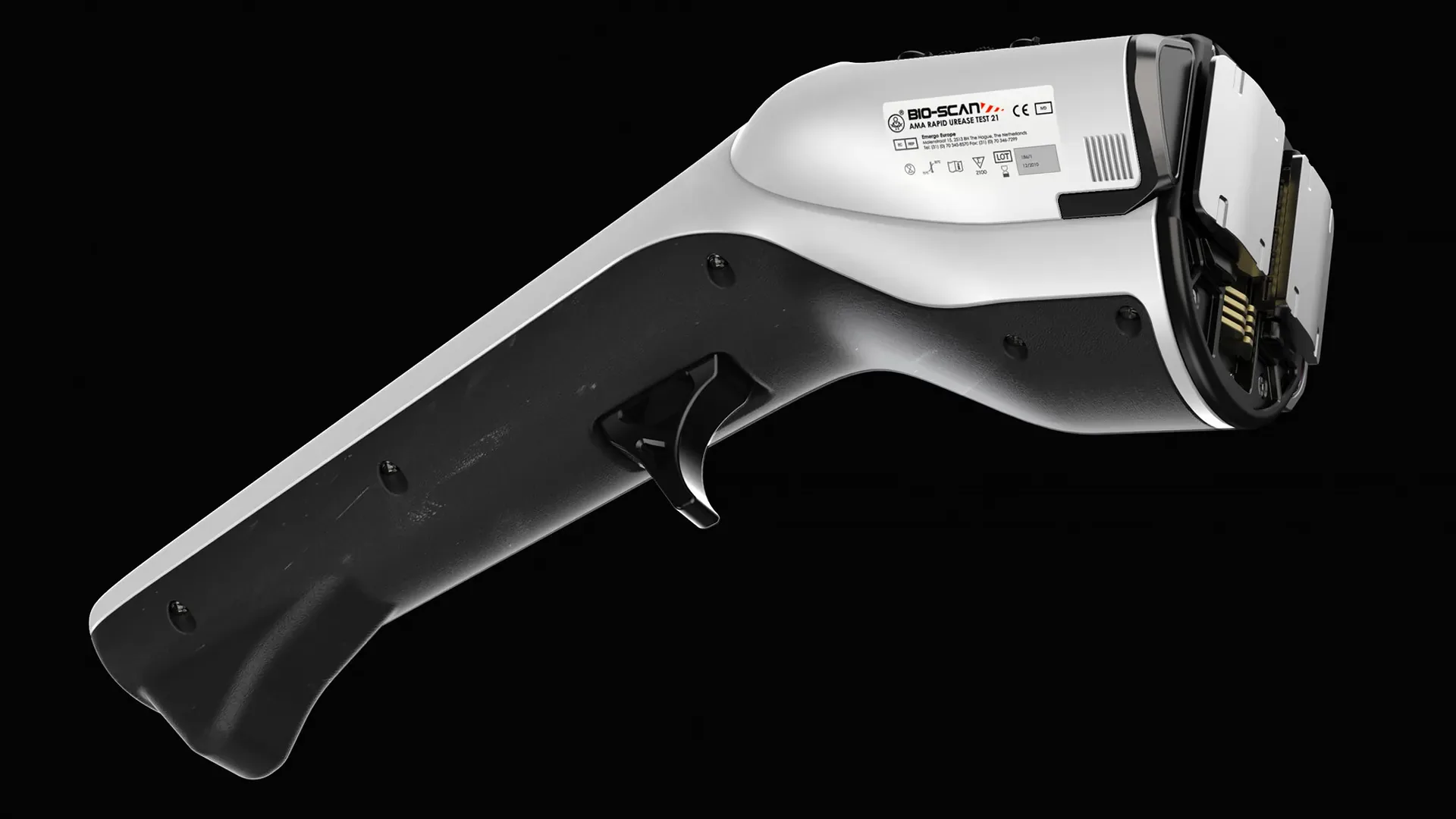
Scanner HUD display visualizations by Territory Studio
Approach — Vehicle
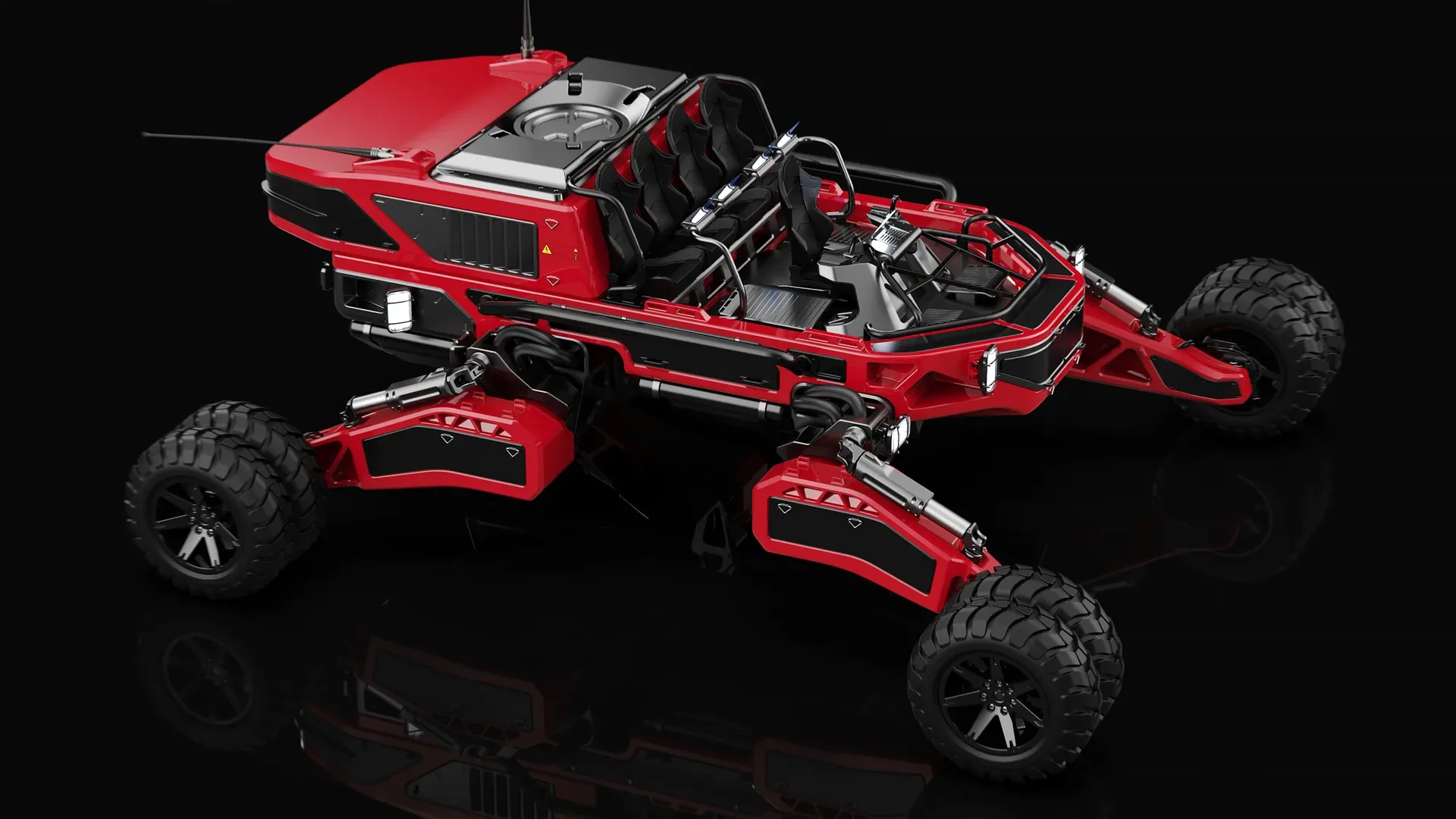
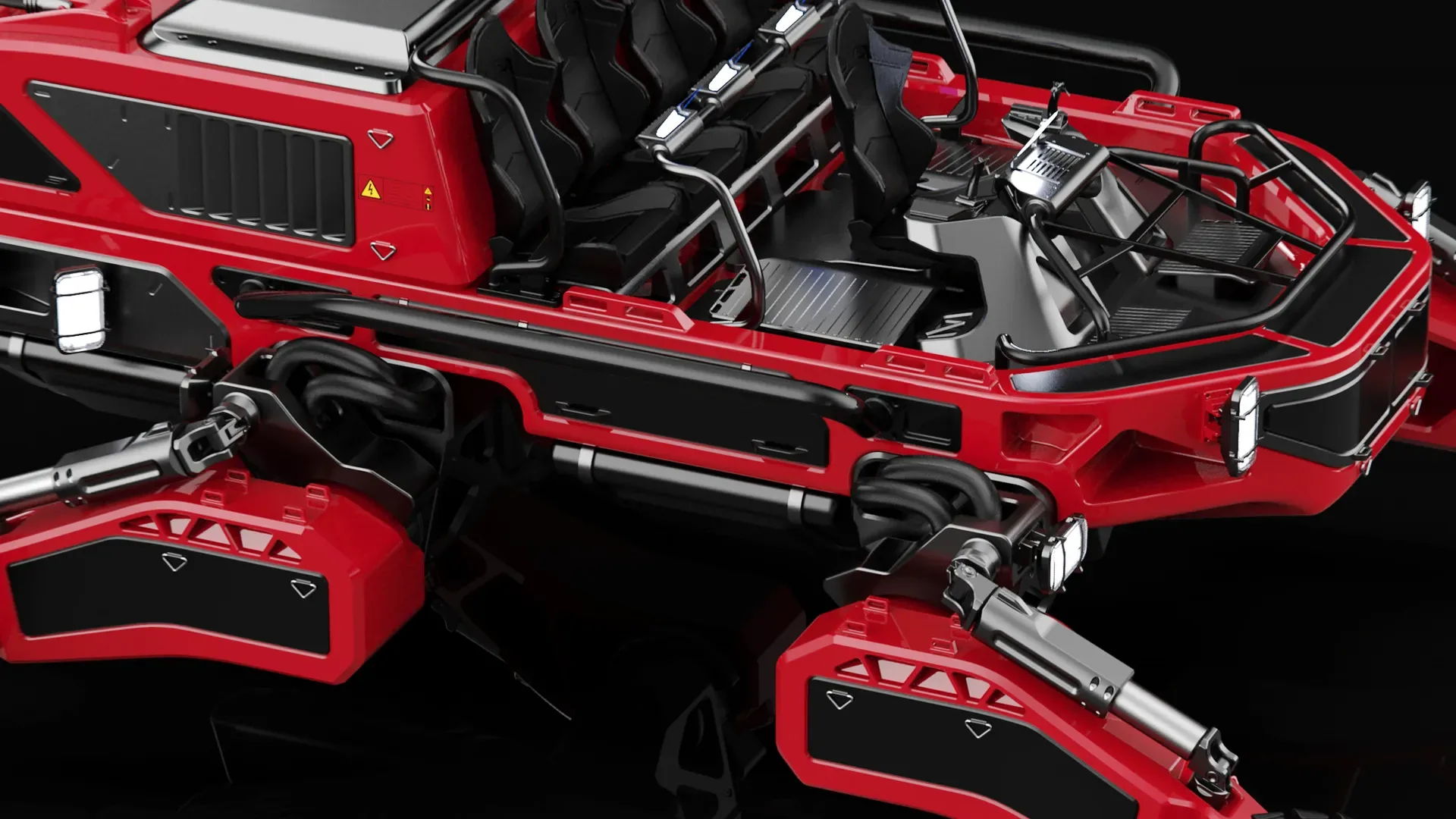
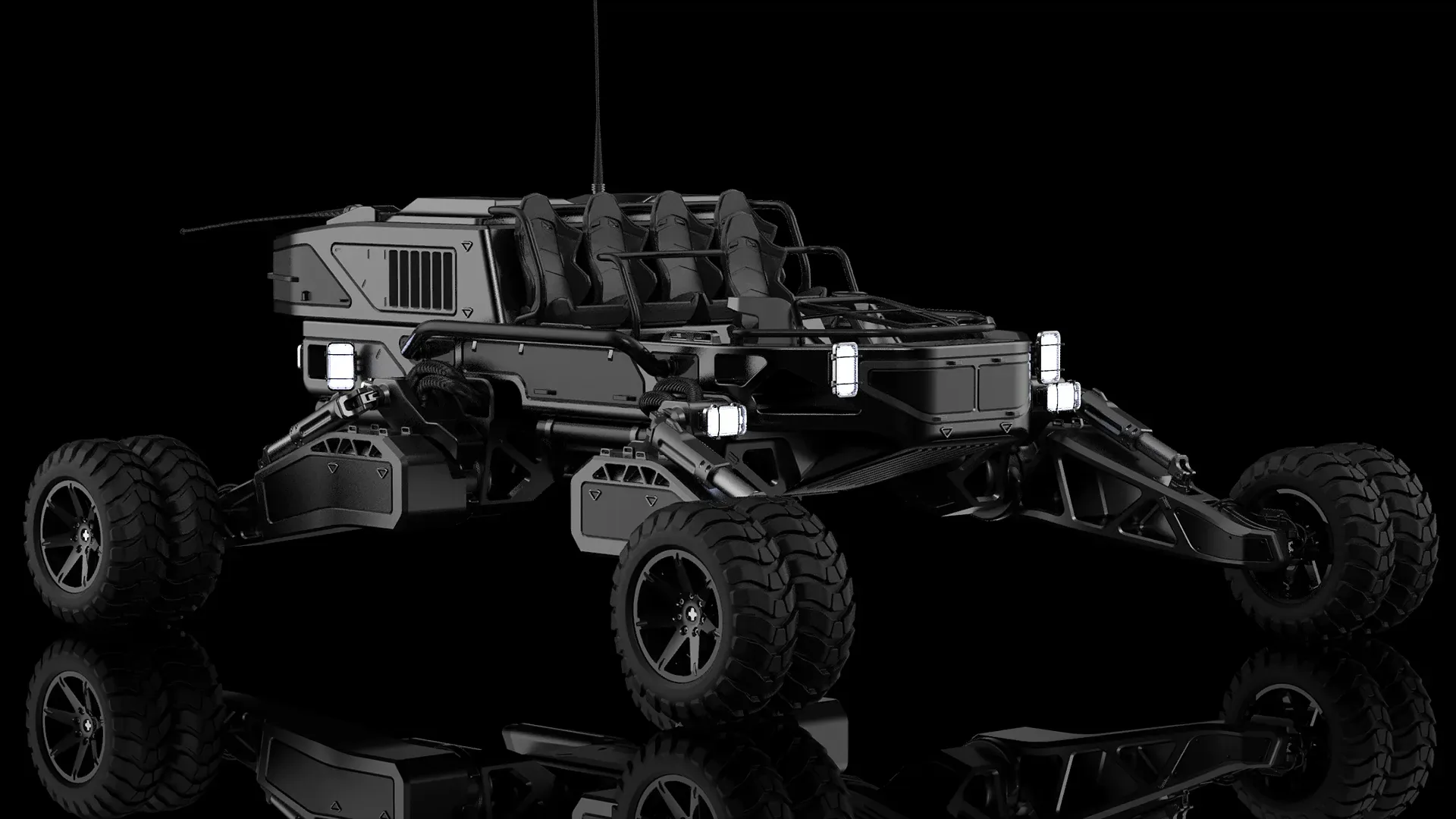
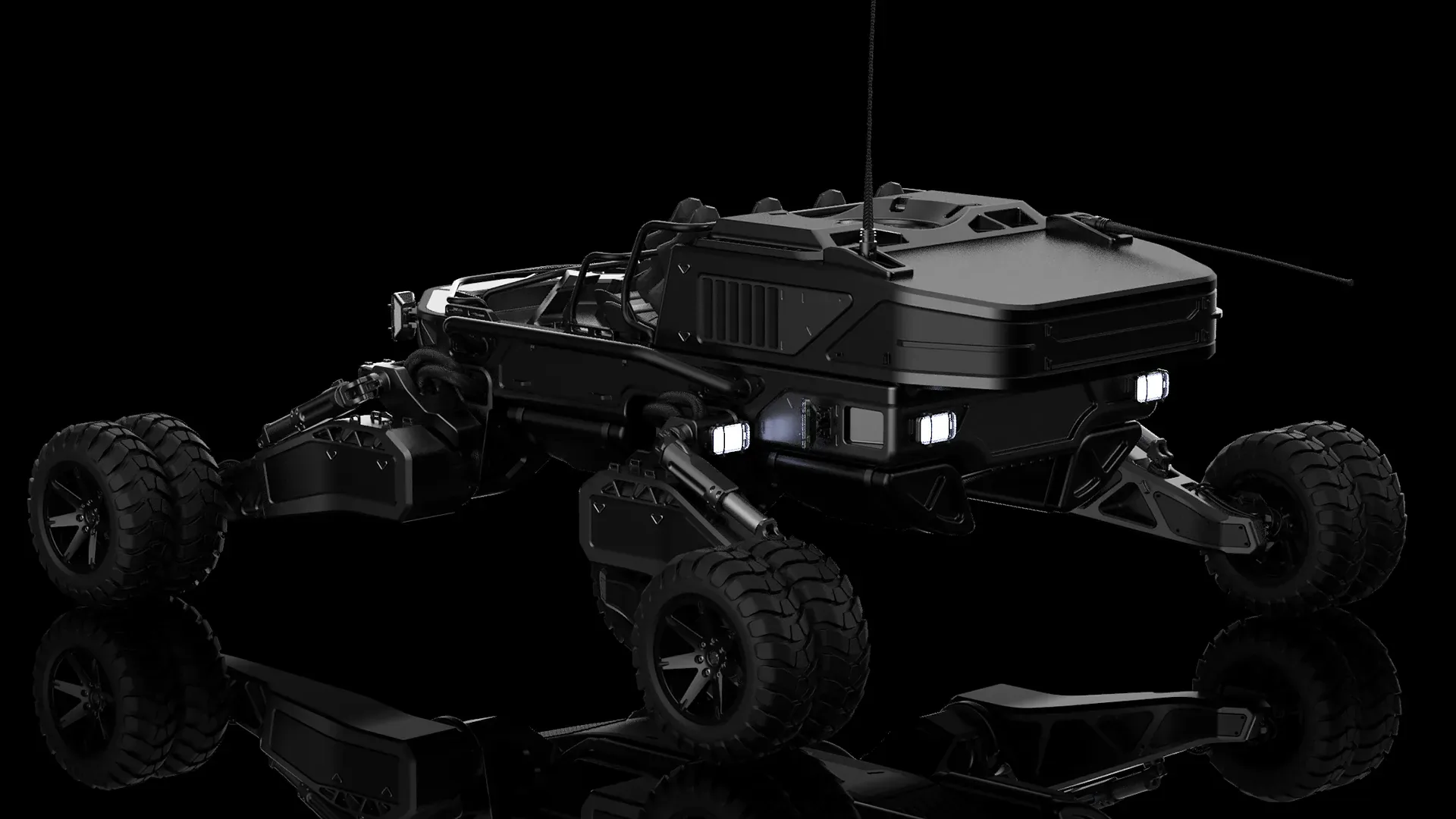
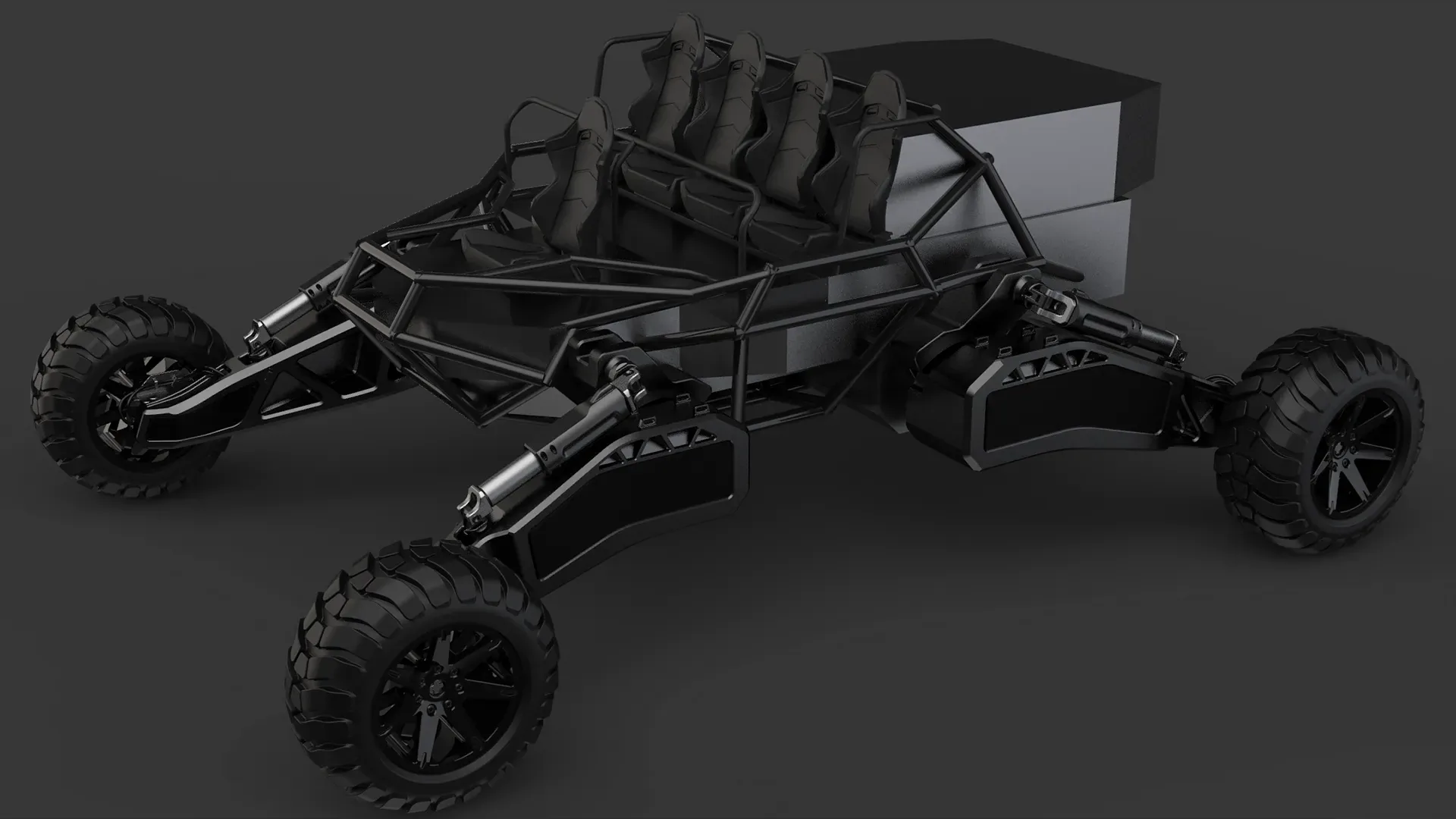
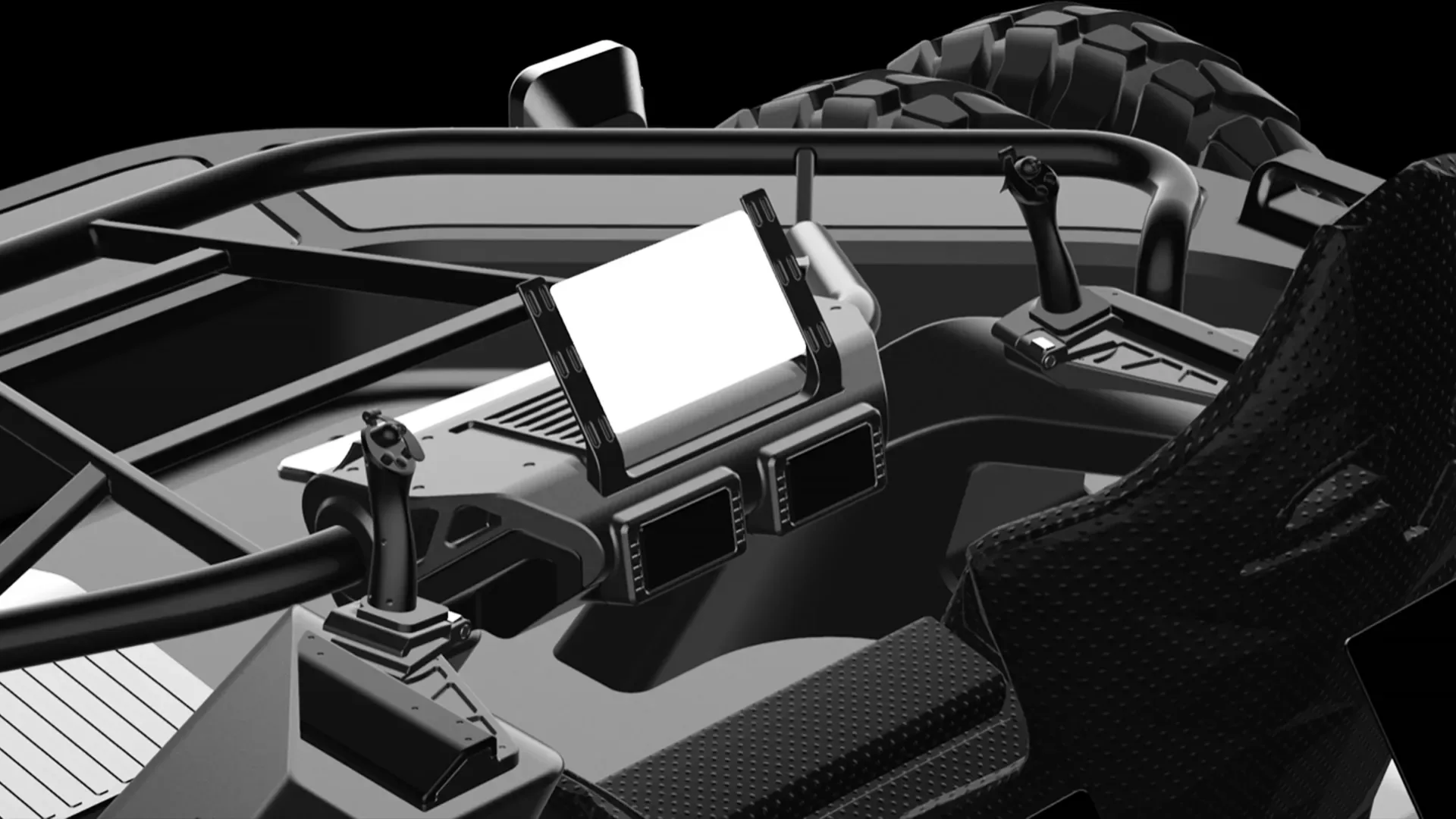
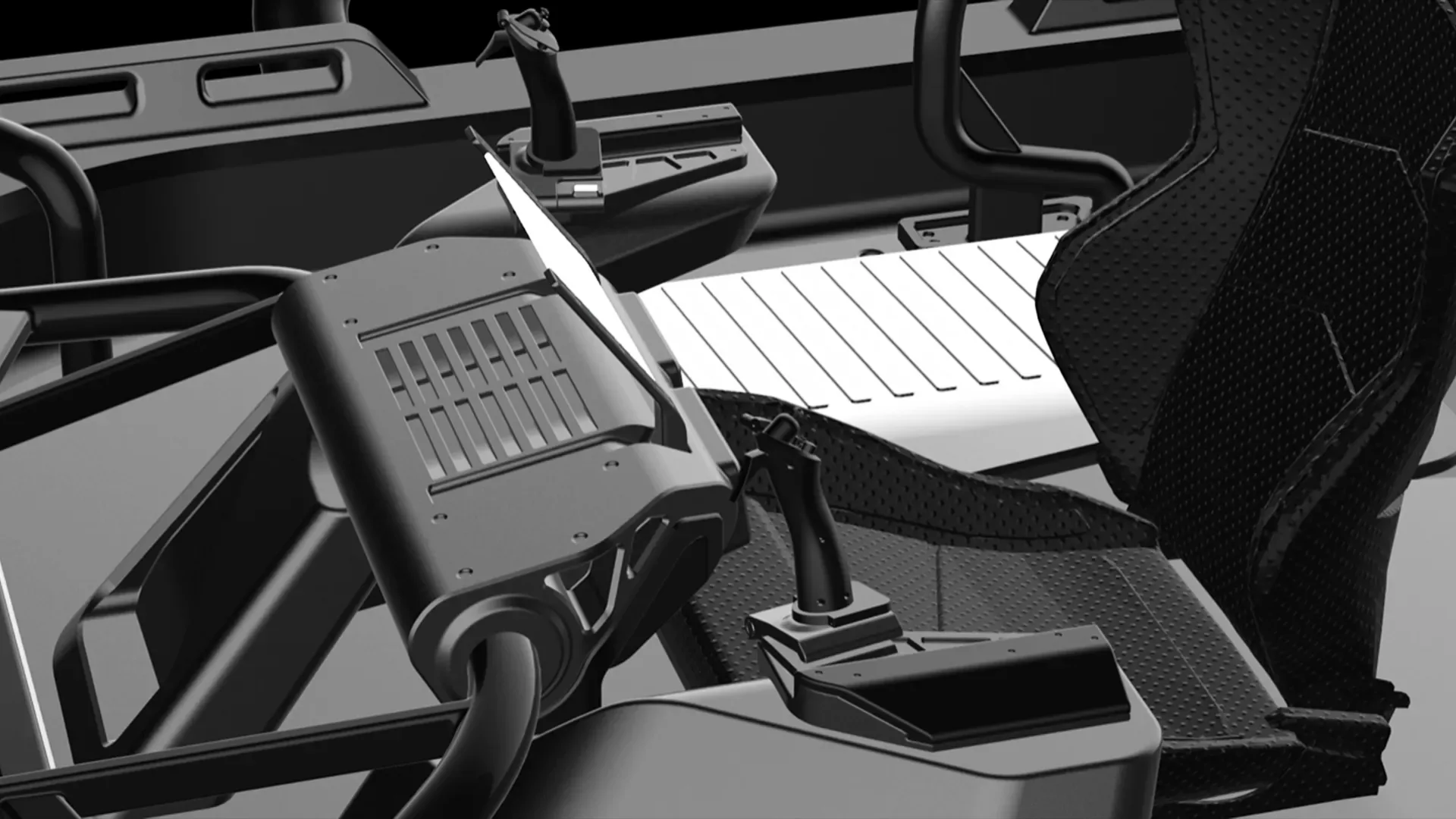
Designed from scratch around the physical seating configuration, then fused with a futuristic off-road chassis built to host it. Rebars and seat aesthetic carried over from the real attraction to keep the cabin continuous between install and VR. Director brief beyond the seating lock: manipulating suspension arms and double-tired wheels on the hubs.
VR field of view shaped the layout — chassis, suspension, and wheels needed to read in the player’s corner periphery so the machine felt occupied, not like a floating camera. Starting from a blank sheet made those constraints solvable together. Outside the locks, surface detail had freedom: functional, modern, still familiar. Pipeline: Moi3D, KeyShot, Photoshop.
Vehicle
Outcome
Delivered vehicle and scanner designs that lock a physical location-based attraction to its VR counterpart — install geometry and controller proportions first, intentional hard-surface language after — so players could trust what they sat in and held while the story carried them through Isla Nublar.
Key Takeaways
Treat physical install and virtual hard-surface as one system; seats and proportions must match or immersion fails.
Controller-proportioned props close the gap between touch and vision.
Designing the vehicle from scratch was how conflicting constraints (seating, suspension language, double-tire hubs, VR FOV) got solved in one package.
Lock constraints early; use remaining surface freedom for product character.