A hero robot that held under Netflix close-ups
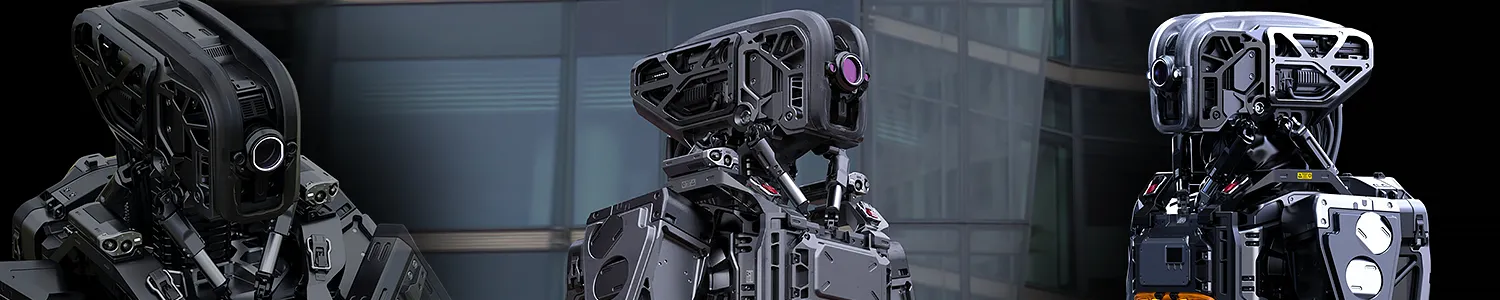
What changed
The production needed a machine that survived extreme scrutiny, story pressure, and pipeline reality. Not a pretty concept — a system that could carry the film’s central relationship and threat without breaking belief.
Visual differentiation between the nurturing Mother and the aggressive Military unit strengthened narrative clarity. The design approach delivered mechanical detail that held in close-up and under animation. Production received direction that integrated into practical suit work and VFX without late reinterpretation.
The process was the means. The outcome was a machine the film could trust.
The production
In 2016, director Grant Sputore contacted me for early conceptual development on a sci-fi thriller in pre-production. The project evolved into I Am Mother, green-lit by Penguin Films and Netflix. My role focused on the design of two distinct droid variants: the nurturing "Mother" robot serving as caretaker for the infants, and a later-revealed "Military Droid" unit. Both required mechanical detailing with organic proportions to withstand close-up cinematic scrutiny while delivering believable functionality and stylized character.
This is my interpretation of the Mother version — intentionally beefier to accommodate performer Luke Hawker within the practical suit built by WETA Workshop. A 3D body scan of Hawker provided the ergonomic foundation. The design combined precision CAD elements with softer organic components, creating visual and functional contrast. Ultimately, WETA adhered more closely to Christian Pearce's conceptual work for the practical Mother suit, which enhanced differentiation from the Military Droid and strengthened overall visual narrative contrast. I remain proud of the collaborative outcome and the film's strong reception.
The Design Brief
Netflix and Penguin Films needed a hero robot asset that could hold screen presence across dialogue-heavy scenes, action sequences, and wide environmental shots. The design had to communicate personality through silhouette, surface detail, and material language alone. The functionality had to be held to a much higher standard and be functional and believable, especially with some brief close-ups during the film.
How the geometry was built
1. Early Concept & Ideation
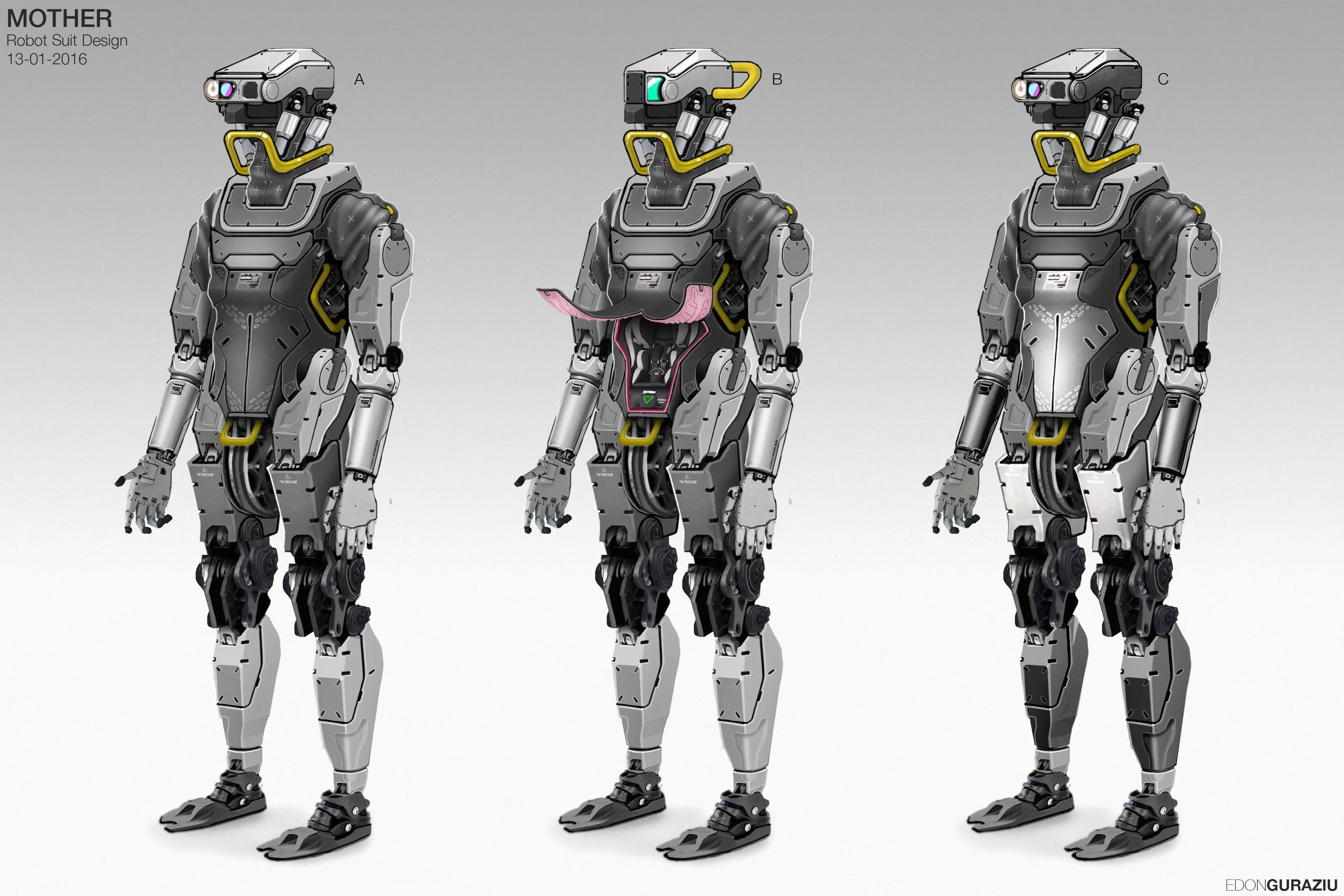
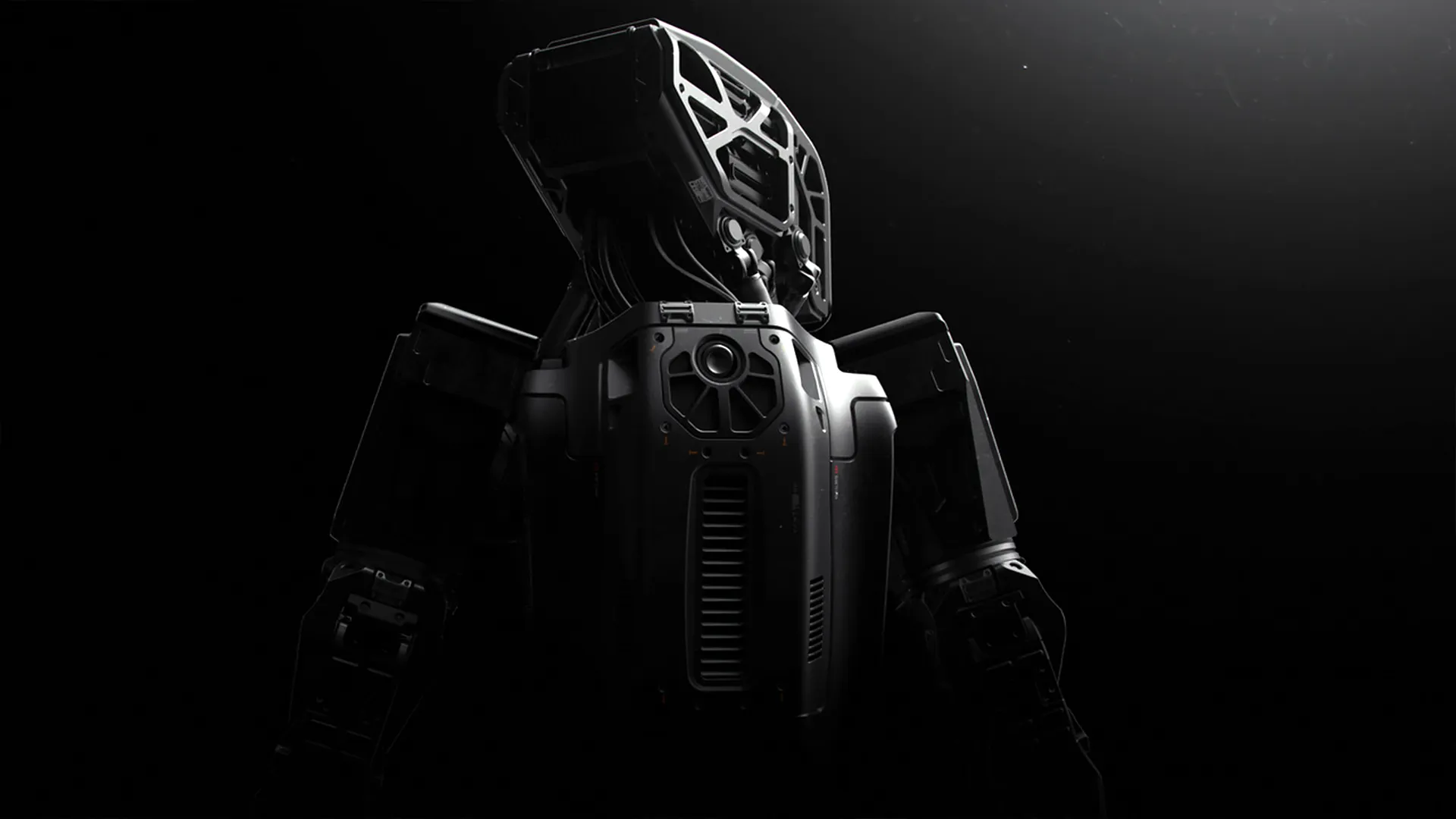
Initial involvement in 2016 centered on broad conceptual development with Grant Sputore to establish the Mother robot's core look and feel. Christian Pearce at WETA contributed major early concepts that aligned with the director's vision. Upon the project's green-light a year later, I returned to refine and expand these foundations into production-ready 3D designs. The process prioritized clear differentiation between the two droid types while maintaining a cohesive technological aesthetic rooted in advanced manufacturing languages.
2. Technical Modeling
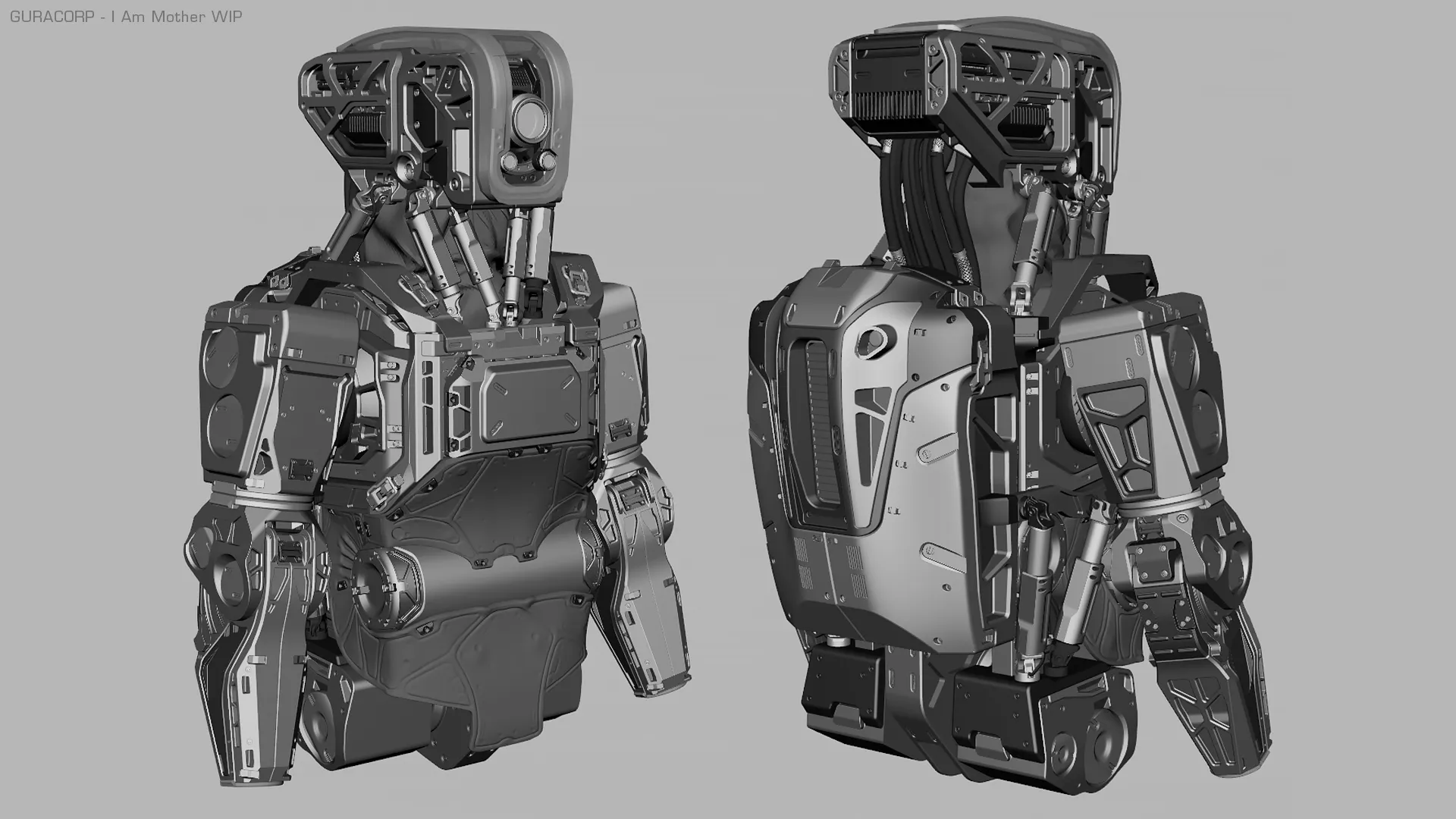
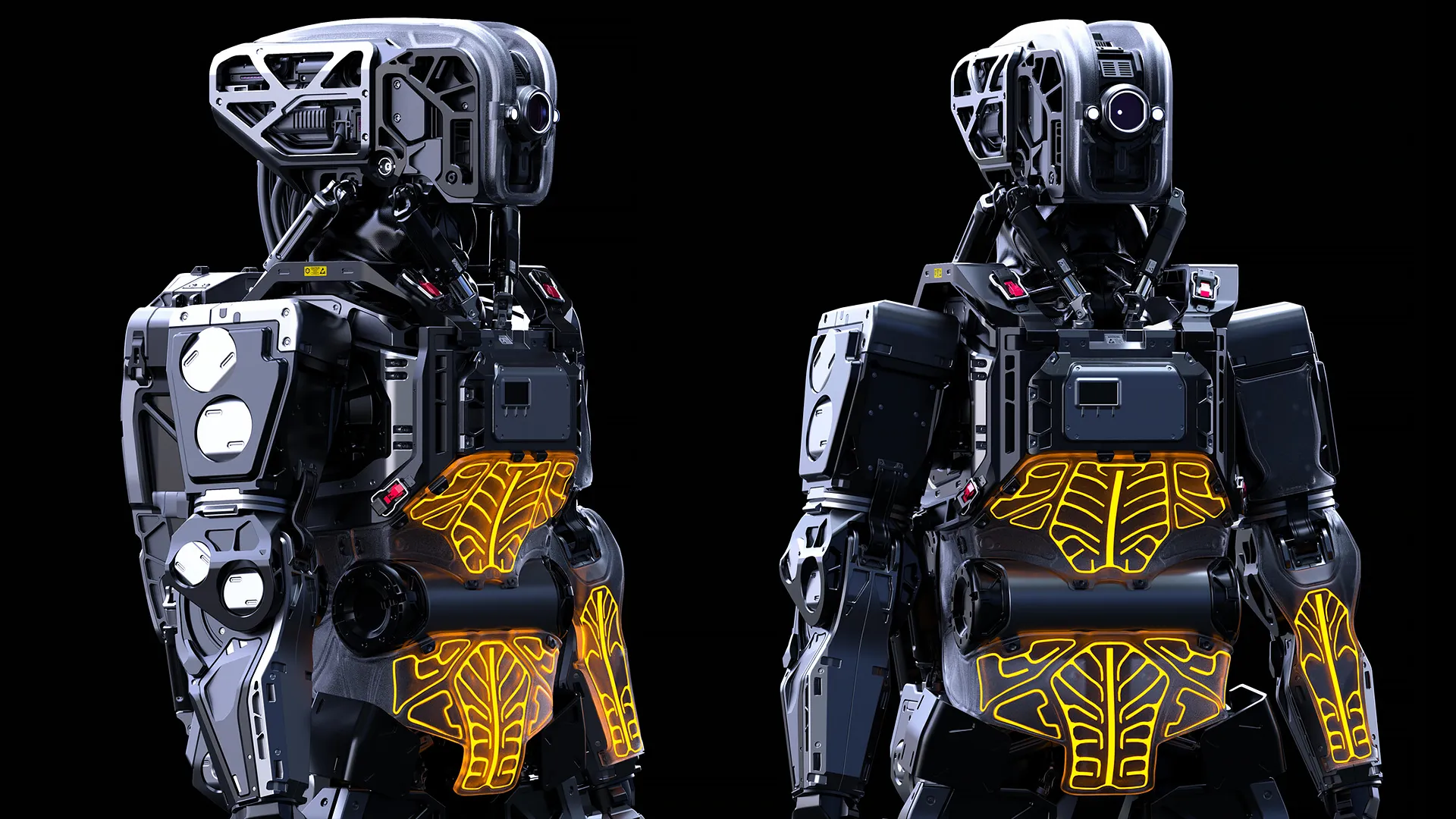
Starting from the provided 3D scan of Luke Hawker, modeling proceeded body part by body part: arms first, then torso, and onward. Moi3D (CAD) handled all precision CAD elements, delivering CNC-machined metal and high-precision carbon fiber characteristics through geometric detailing. Autodesk Maya managed SubD modeling for softer elements, including heated thermal padding, cloth, cables, and wire patterns — the latter proving particularly enjoyable to develop.
This hybrid workflow fused two distinct modeling languages into a compelling whole. The belly section, neck area, and other zones incorporated varied internal structures to conceal the performer while preserving external robotic integrity. Material manufacturing cues (precision CNC metal contrasting injection-molded parts and soft padding) emphasized utilitarian nurturing within an otherwise cold mechanical entity. Iterative feedback loops with Grant ensured design choices aligned with production requirements.
3. Lookdev & Rendering
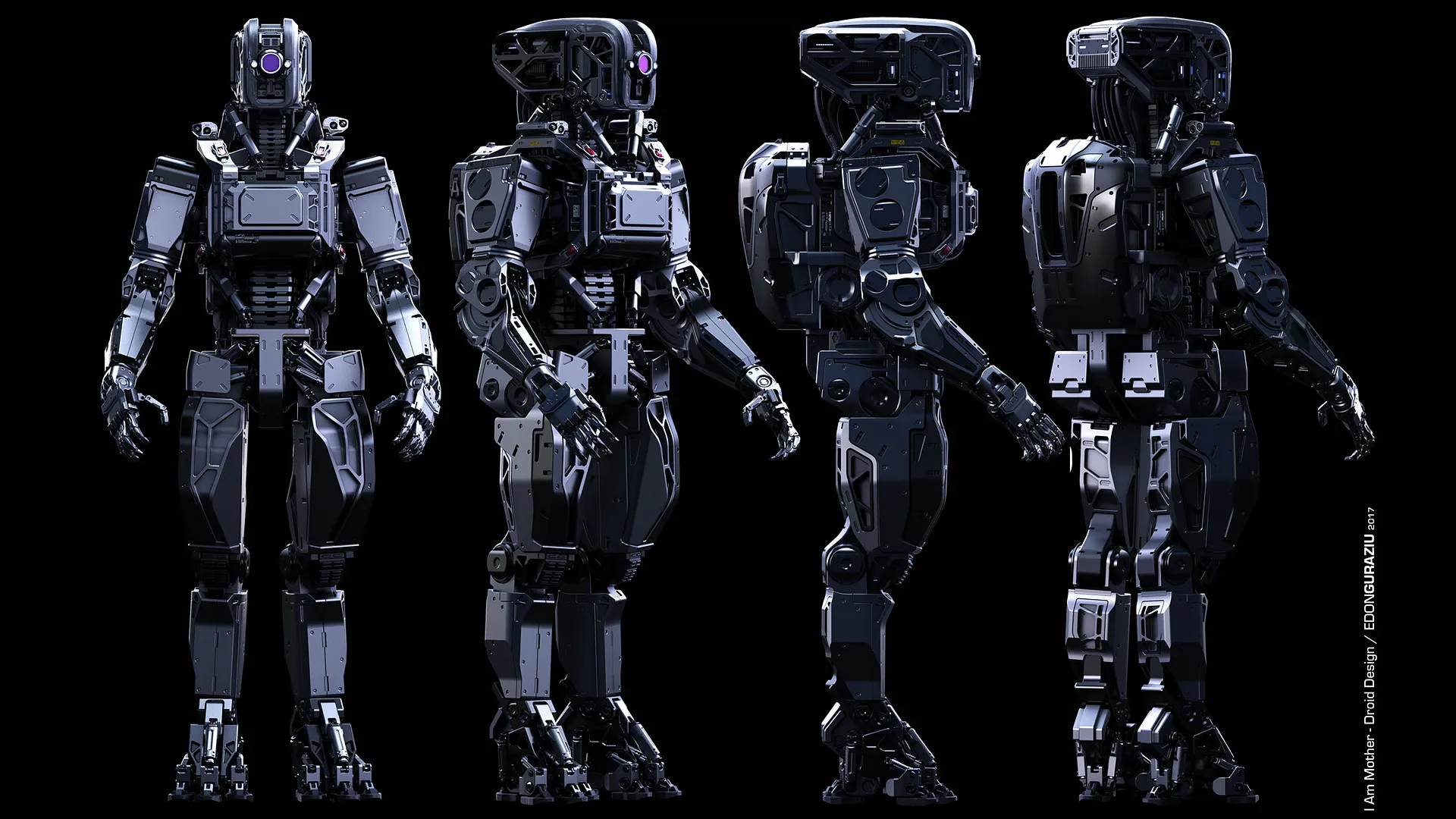
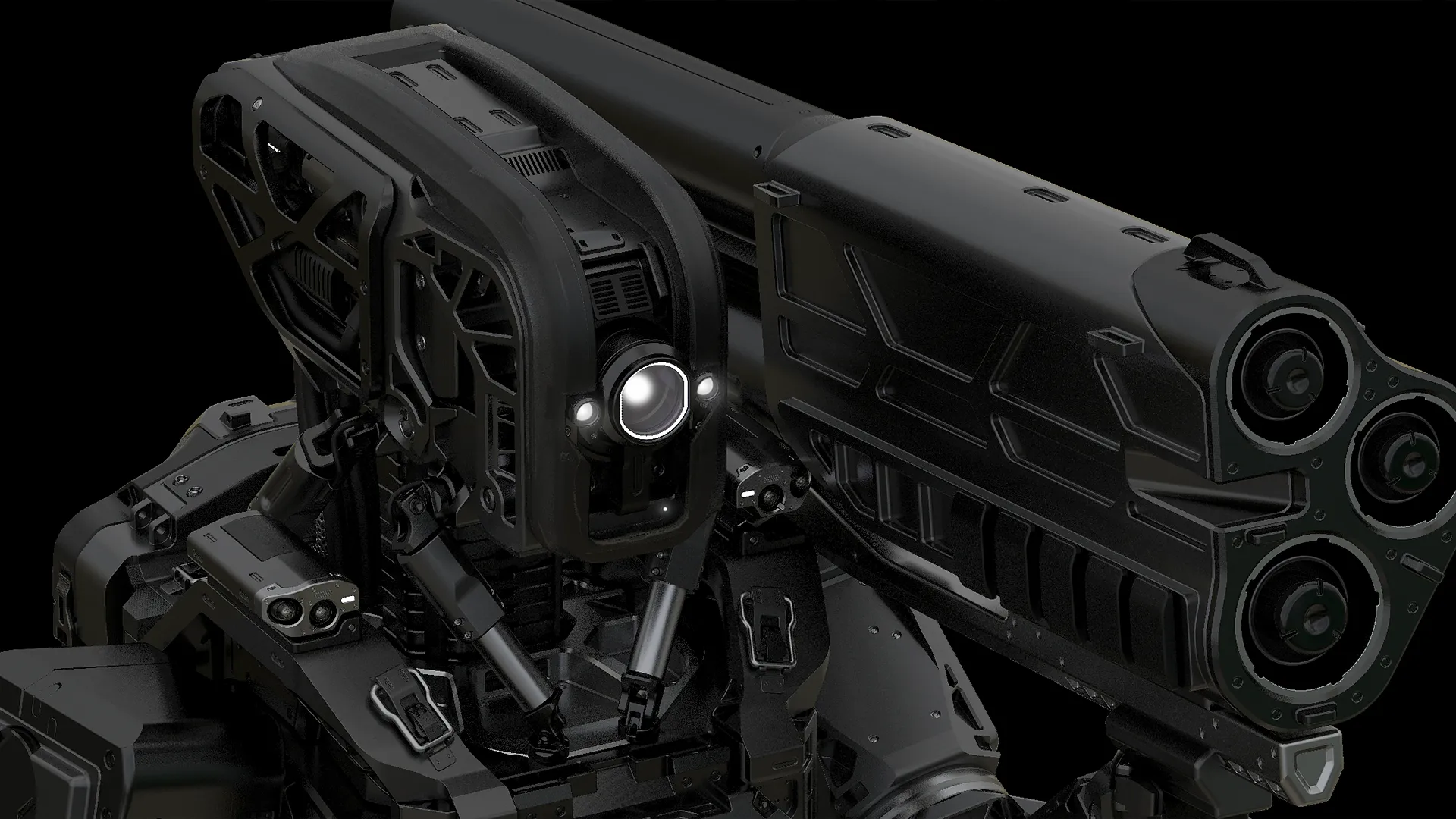
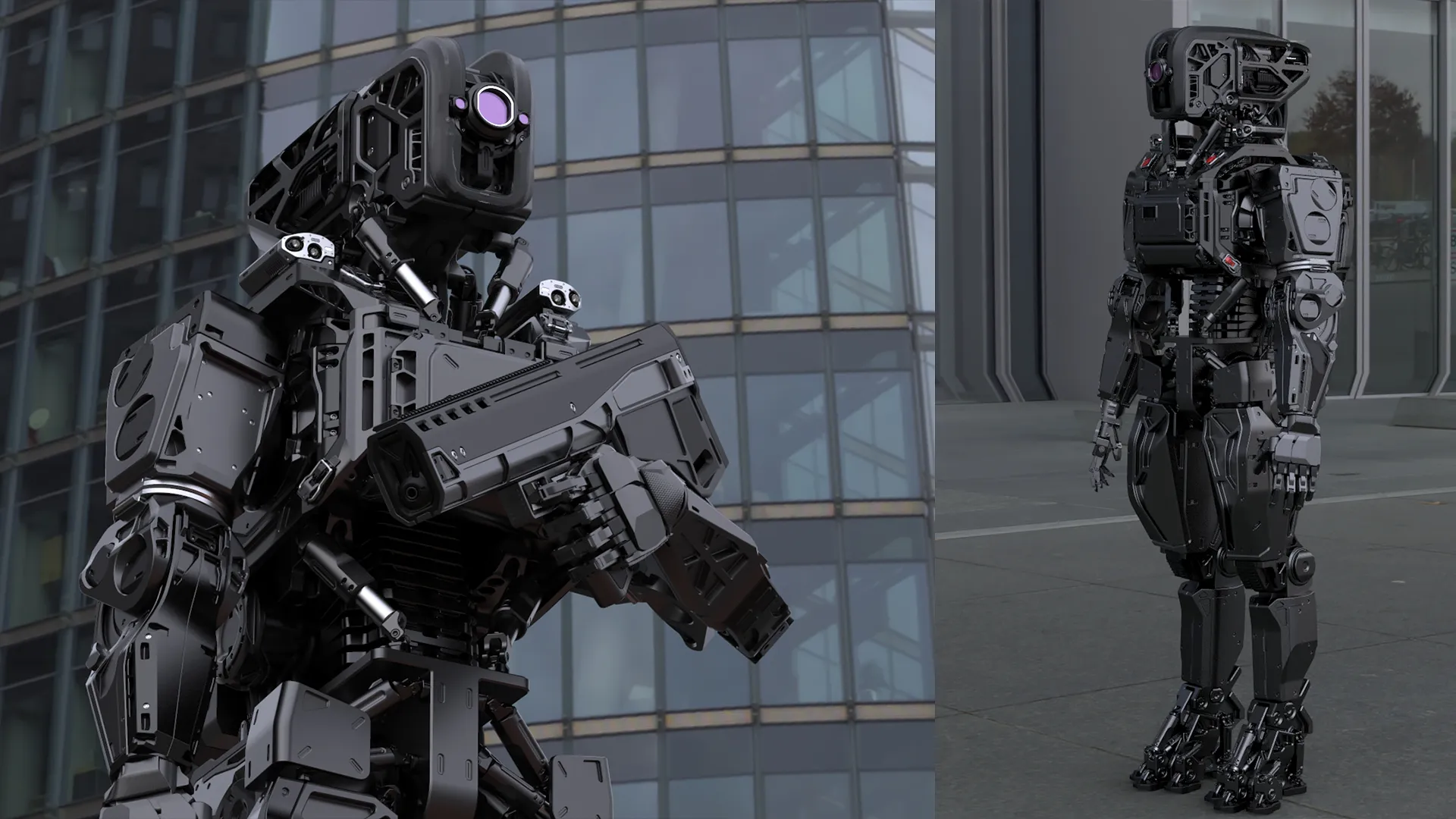
KeyShot served as the primary rendering engine for high-fidelity visualization of materials, lighting, and surface details. Photoshop handled final compositing and presentation plates. The combination enabled precise evaluation of CAD precision against organic elements, supporting client reviews and VFX handoff preparation.
4. Military Droid Design
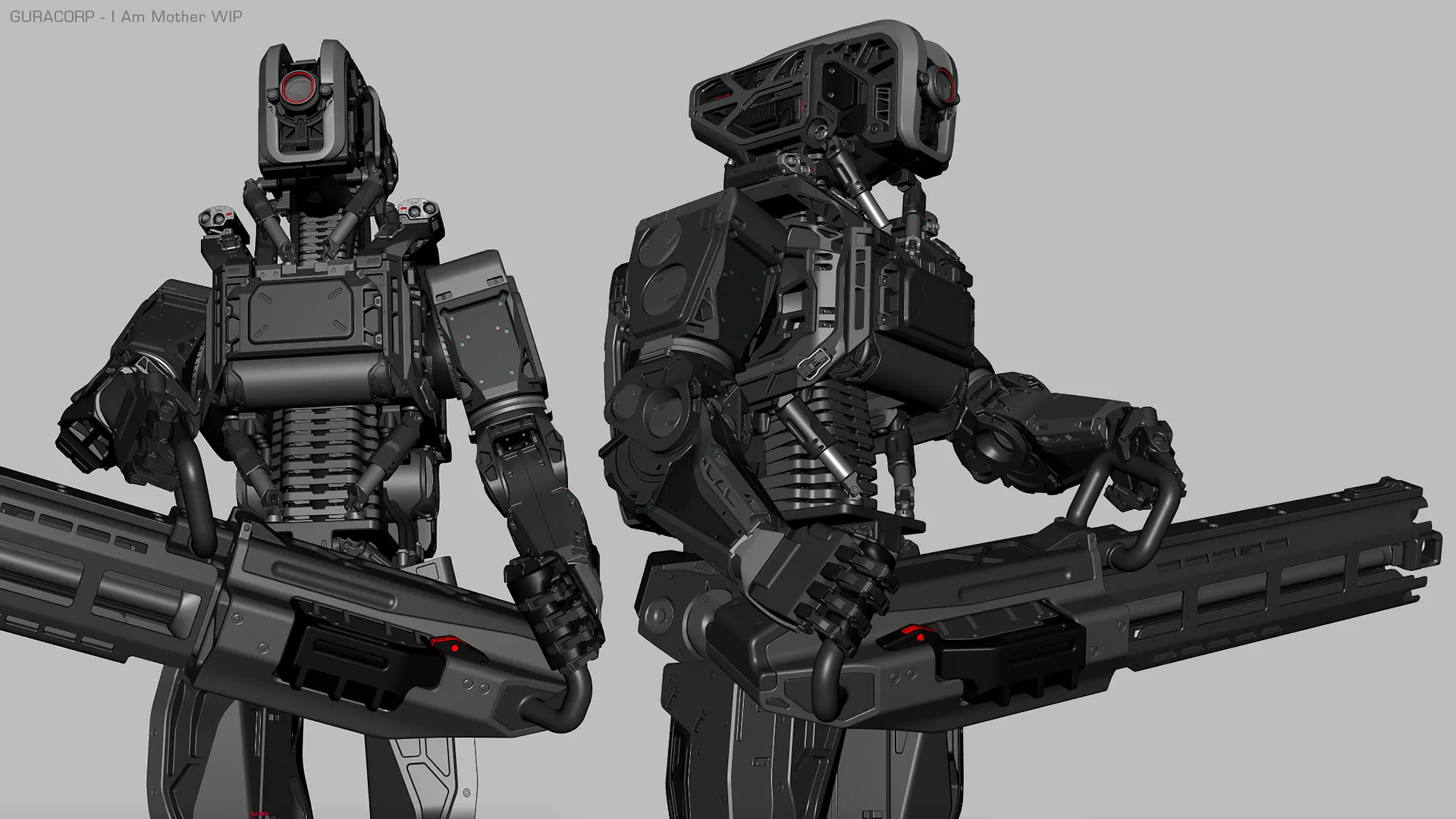
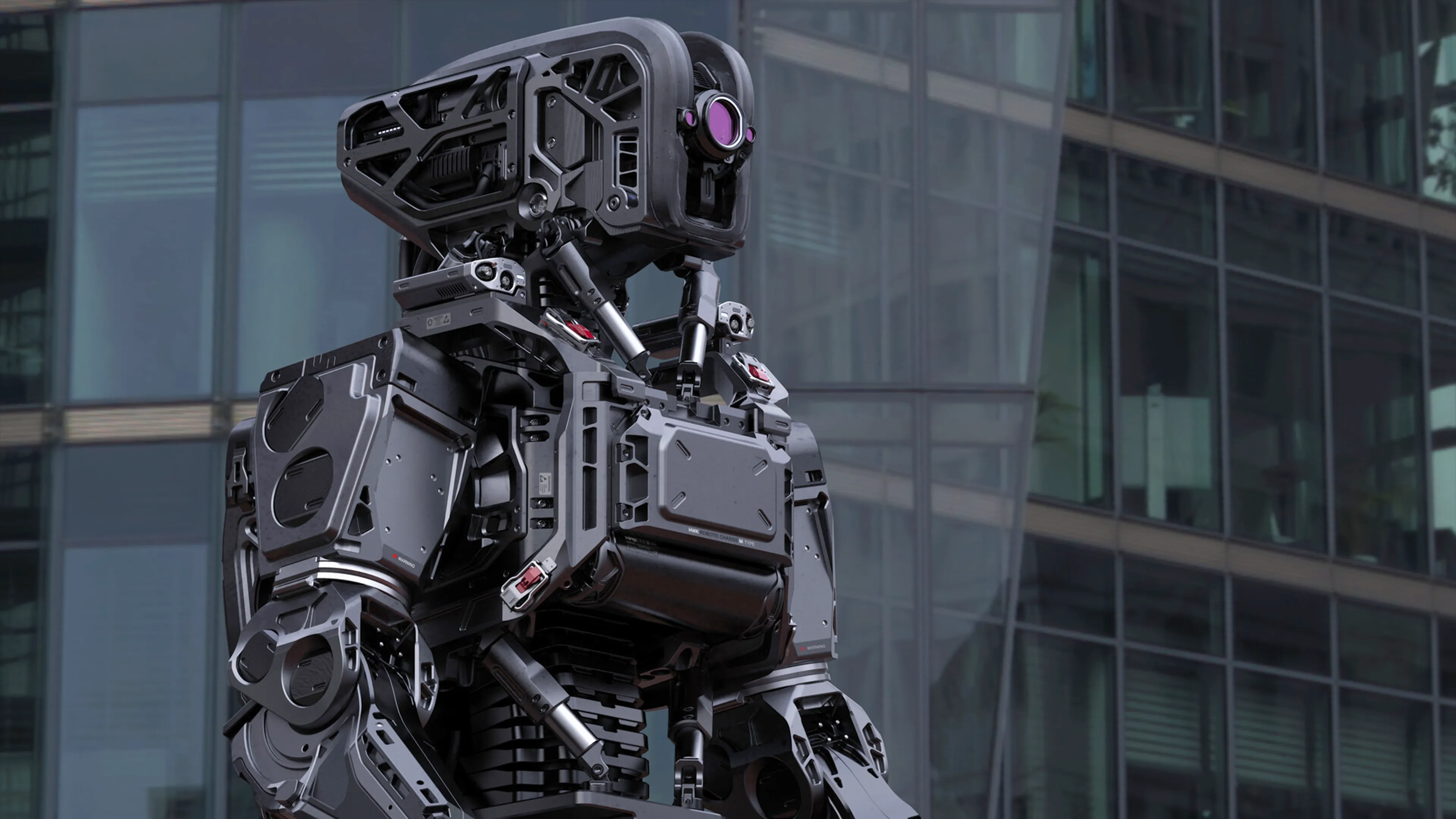
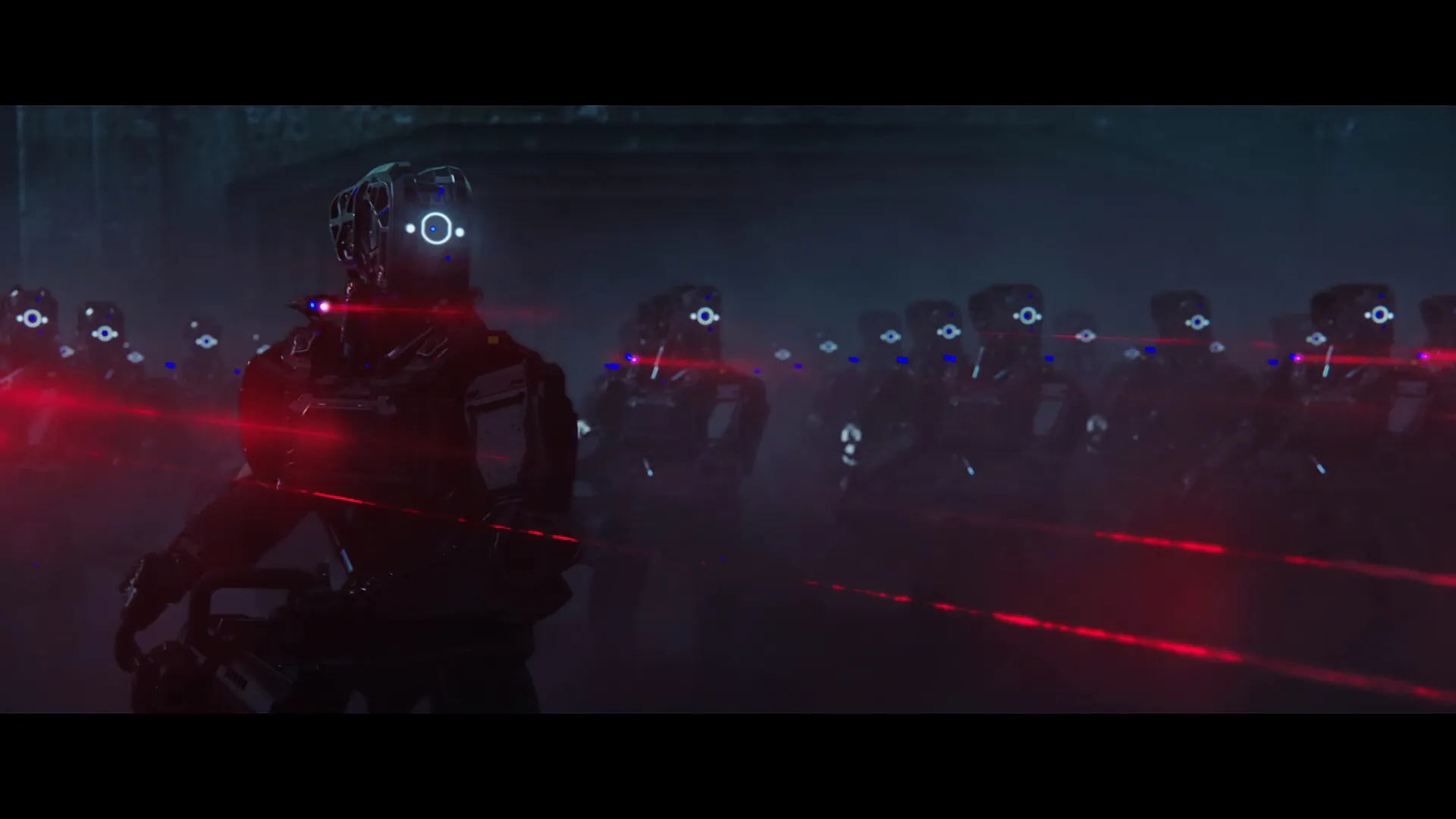
Following Mother approval, focus shifted to the Military variant. Greater proportional freedom allowed de-humanization of the silhouette through mass reduction in select areas, yielding a more aggressive, dark, industrial aesthetic. Joints and hydraulics received rigorous attention to eliminate clipping and ensure clearance, maintaining full functionality for close-up sequences. Servo and head manipulation mechanisms were engineered for believable motion, enhancing on-screen mechanical credibility.
5. Integration & Delivery
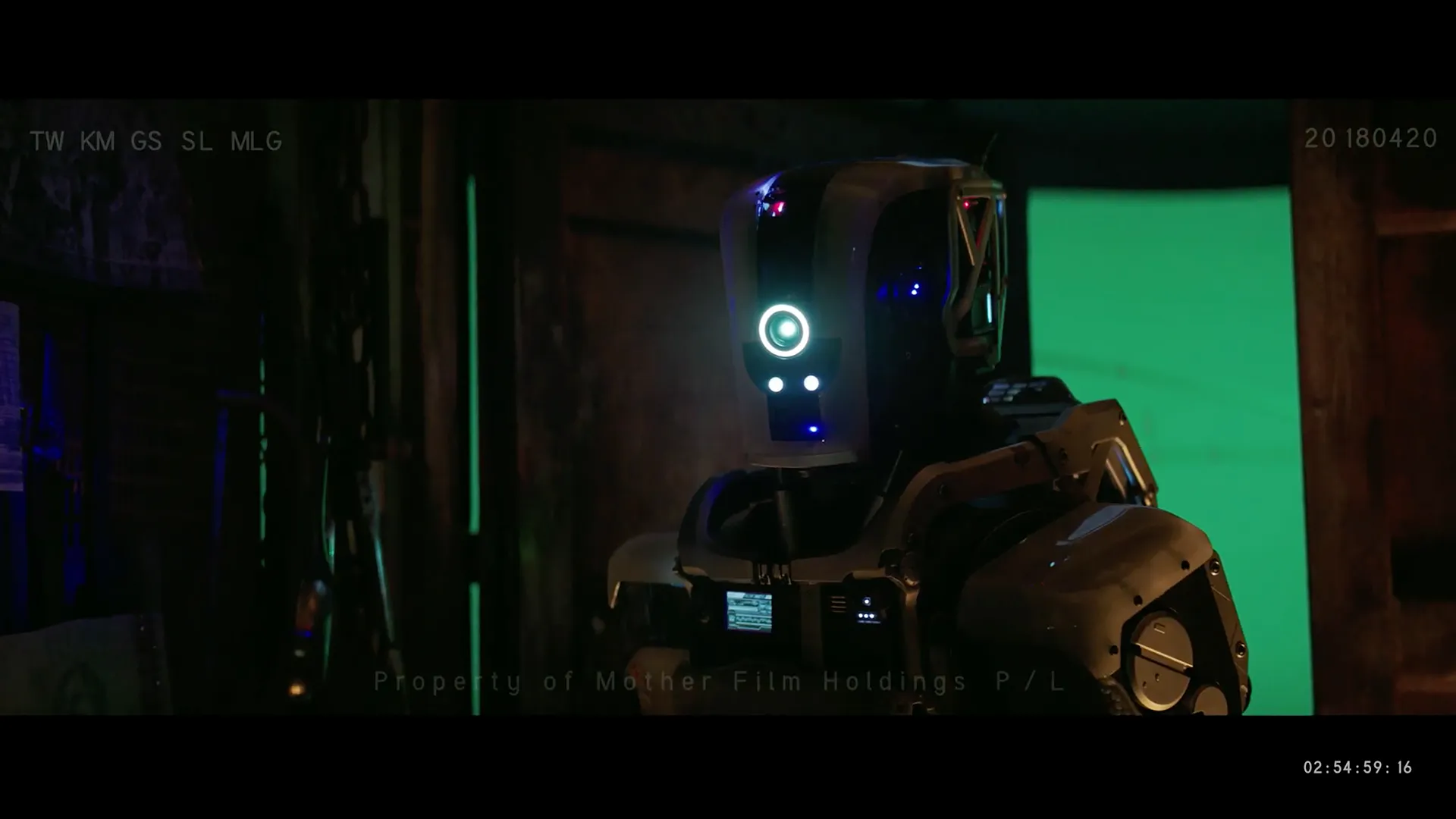
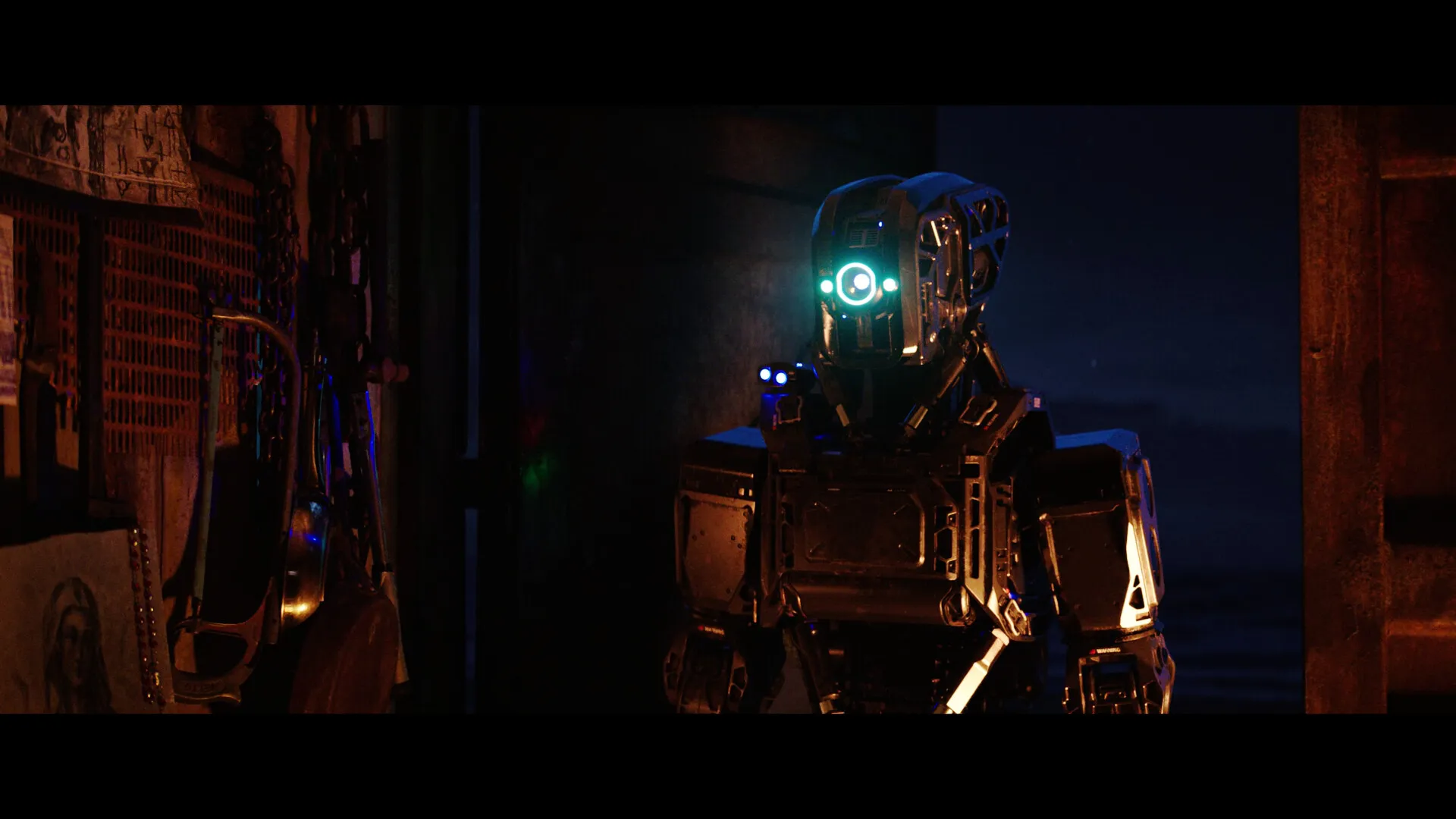
The finalized assets advanced into the VFX pipeline at Fin Design + VFX for re-topology, UV mapping, texturing, look-dev, rigging, animation, rendering, and compositing. The practical Mother suit (WETA) captured on-location footage, with Fin Design replacing the performer with the fully CG Military Droid where required. Before-and-after VFX plate comparisons highlight the seamless integration and stark contrast between the two designs.
Results
The Mother robot design featured across the film's full runtime, marketing materials, and festival press. The Military Droid delivered impactful reveals through precise, functional animation. The CAD approach married to cinematic rendering established a benchmark for subsequent GURACORP® film projects. The pronounced visual differentiation between the nurturing Mother and aggressive Military units strengthened narrative clarity and aesthetic impact.
Key Learnings
Hybrid CAD/SubD workflows (Moi3D + Maya) excel at bridging precision manufacturing aesthetics with organic functionality under tight practical constraints. Designing around real performer scans demands meticulous attention to internal clearance and external form. Clear separation of visual languages between droid variants enhances contrast and storytelling. Collaborative iteration with directors, concept artists (e.g., Christian Pearce), and VFX teams (WETA, Fin Design) remains essential for translating conceptual vision into production reality. The project reinforced the value of believable mechanical detailing that supports both static scrutiny and dynamic performance.
The process was the means. The outcome was a machine the film could trust.